AI-Powered Demand Forecasting & Supply Chain Planning

Build Greater Confidence in Demand, Inventory, and Supply Decisions
AI-Powered Demand Forecasting & Supply Chain Planning Platform
Challenges
When Demand Changes, the Cost of Planning Gaps Grows
Supply chain leaders must protect service levels while controlling inventory investment and operating costs. Forecast uncertainty makes that balance harder, particularly when teams rely on disconnected information and repeated manual adjustments.
Demand Uncertainty
A plan that no longer reflects market conditions can leave the business investing in the wrong products, quantities, or locations.
Inventory Imbalance
Too little stock puts sales and customer relationships at risk. Too much stock consumes working capital and limits financial flexibility.
Delayed Responses
When teams spend time reconciling information, the window to respond to a demand shift or supply disruption can narrow.
Difficult Trade-offs
Decisions about availability, cost, and inventory need a clear business rationale. Leadership needs to understand the choices before committing resources.
Overview
Why aptPlan?
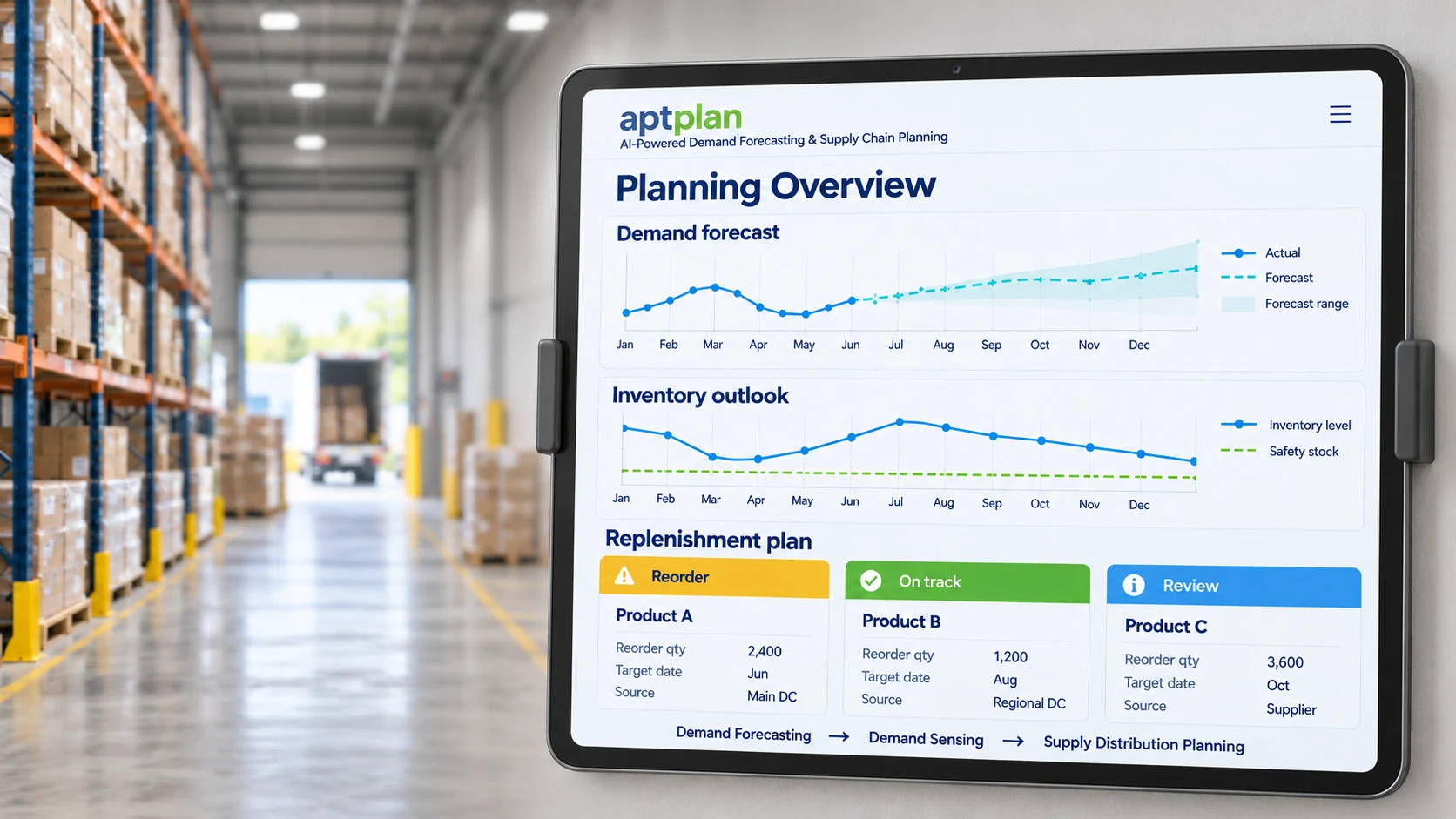
aptPlan is designed to handle the complexity of modern day rapidly changing demand behavior and generate highly accurate demand forecasts using cutting edge AI/ML algorithms and classical forecasting models. It automatically considers a wide range of dynamic variables that impact demand patterns and use AI models to produce highly accurate demand forecasts. The advanced Supply Planning solution uses advanced features like dynamic safety stock determination & auto replenishments to optimize inventory, eliminate stock-out situations and better demand fulfillment.
Modules
Connected Intelligence Across Demand and Supply
Demand Forecasting

Demand Forecasting
Combines statistical and the latest AI/ML models, selecting the best-fit model for each product-location combination to improve forecast accuracy. Integrated with ERP systems, its intuitive interface enables planners to review trends, adjust inputs, and validate forecasts.
Demand Sensing

Demand Sensing
Updates short-term forecasts by detecting and adjusting for demand shifts caused by weather, pricing, promotions, competitor activity, and socioeconomic signals. It turns demand signals into faster responses, helping businesses adapt to market changes, reduce lost sales, and improve service levels with less manual intervention.
Supply Distribution Planning

Supply Distribution Planning
Converts forecasts into actionable supply plans using safety stock, reorder thresholds, replenishment cycles, lead times, supplier capacity, and service targets. Integrated with ERP and inventory systems, it improves visibility and enables “what-if” planning for disruptions and demand spikes—supporting leaner inventory, higher fulfillment rates, and greater supply chain agility.
Capabilities
AI-Powered Precision for Demand and Inventory Planning
Improve planning accuracy, respond to changing demand, and align inventory with business needs.

AI/ML-Driven Forecasting
aptPlan selects the best-fit forecasting model for each product-location combination, using AI/ML algorithms to improve demand forecast accuracy and support more reliable planning decisions.

Demand Sensing
Track changing demand signals—including promotions, weather, and pricing—to refine short-term forecasts and respond faster to market shifts.

Simulation & Scenario Planning
Run “what-if” analyses to evaluate alternative scenarios and assess their implications before making planning decisions.

Integrated Data Models
Integrate sales history and master data from enterprise systems such as ERP, providing a connected data foundation for demand forecasting and supply chain planning.

Demand Driver Analysis
Analyze seasonality, marketing, pricing, promotions, and supply factors to understand their impact on demand and improve forecast accuracy.

Inventory & Replenishment Optimization
Optimize inventory using dynamic safety stock and automated replenishment, factoring in demand forecasts, current stock, and planned orders to reduce shortages and overstocking.
Architecture
Business impact
Connect Planning Performance to Business Priorities

Revenue Protection
Keep customer availability at the center of planning decisions. Evaluate inventory choices in terms of the demand the business needs to serve.

Working Capital Discipline
Make inventory investment a deliberate decision. Balance the cost of holding stock with the commercial consequences of insufficient availability.

Operational Resilience
Prepare teams to evaluate alternatives when conditions change. A resilient planning process helps leadership make timely decisions under uncertainty.

Planning Productivity
Give planners room to apply business judgment, investigate exceptions, and work with stakeholders on decisions that need attention.

Management Confidence
Create a clearer basis for conversations about demand, inventory, and service performance. Make assumptions and priorities easier to examine.