On-Demand AI Talent & Delivery

Bring the Right Expertise to Your Enterprise AI Initiatives
Flexible delivery capacity aligned with your business priorities.
Challenges
AI Ambitions Need the Expertise and Capacity to Execute
Enterprise AI initiatives require different skills at different stages. Leadership must balance delivery commitments with the availability of technical expertise and an understanding of the business.
Gaps in Specialist Expertise
An initiative can require skills beyond those available within the current team. These gaps can affect decisions about scope, readiness, and delivery.
Changing Capacity Requirements
Workload and priorities evolve as projects progress. A team structure that fits an initial investigation may need adjustment during implementation.
Disconnect Between Advice and Execution
Recommendations need a practical implementation path. Clear responsibilities help organizations carry decisions forward into delivery.
Technical Work Without Business Context
Teams need to understand where a solution will operate and how its success will be assessed. Technical progress alone does not establish business value.
Overview
Why aptAIForce?
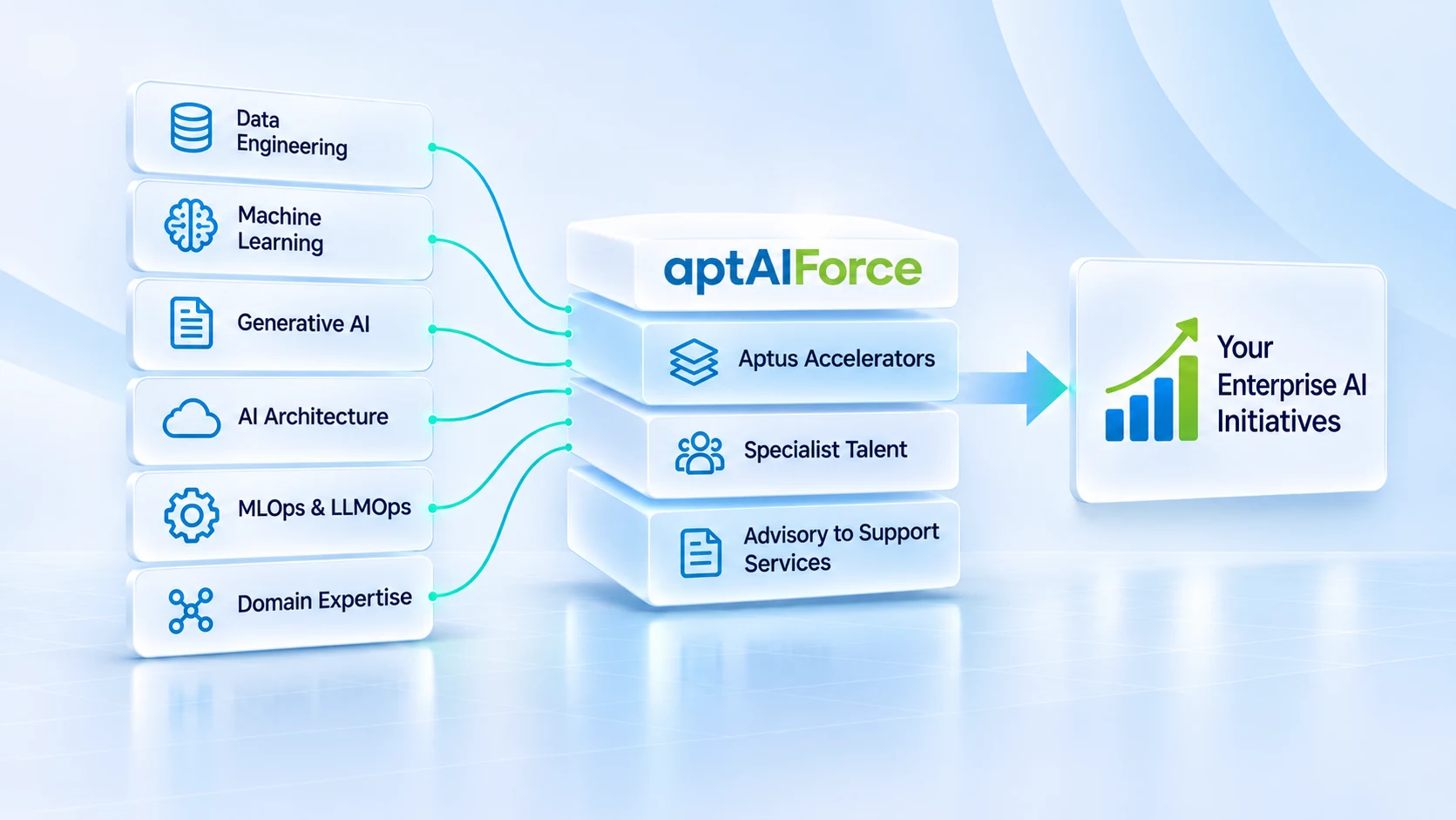
aptAIForce combines specialist AI and data talent, reusable Aptus frameworks, and advisory-to-execution support to help enterprises deliver AI initiatives. Teams bring technical expertise and industry context across data engineering, machine learning, Generative AI, architecture, and production operations. With flexible engagement models and global delivery options, organizations can align capacity with changing project requirements. Defined quality, IP-protection, and governance practices support accountable delivery from planning through implementation.
Modules
Capabilities
Specialist Expertise Across Data, Models, and Production

Data Engineering
Build data lakes, ingestion frameworks, and pipelines. Establish the data foundations needed before investing further in downstream AI development.

Machine Learning Engineering
Support model building, tuning, and optimization. Give initiatives access to specialists who can examine model performance against the intended task.

Generative AI Development
Work with LLMs, RAG, prompt design, and fine-tuning. Match development choices to the information and interactions the business needs to support.

AI Architecture
Address platform design, scalability, security, and cloud AI. Consider operating requirements early enough to inform implementation decisions.

MLOps & LLMOps
Support lifecycle management, observability, and CI/CD. Bring production operation and maintenance into the delivery conversation.

Domain Expertise
Apply industry context, regulatory alignment, and validation. Help technical teams evaluate requirements in the environment where the solution will be used.
Delivery foundation: Aptus frameworks and accelerators support execution, with quality, IP-protection, and governance protocols. Collaboration options include offshore, nearshore, and hybrid delivery.
Architecture
Delivery models
Engagement Options for Different Delivery Requirements

Project-Based Delivery
Deliver against defined outcomes and timelines. This model suits initiatives where the organization can establish a clear scope and agree on what completion should mean.

Dedicated PODs / AI Squads
Align cross-functional teams with your roadmap and workflows. This provides a team structure for organizations managing a connected program of work.

Time & Material
Adjust team capacity around evolving demand and sprint priorities. This offers an engagement option when requirements need to develop through successive delivery stages.

Advisory + Execution Hybrid
Combine AI leadership and consulting with implementation. Keep strategic decisions connected to the people responsible for carrying them into practice.
Business impact
Delivery Capacity Connected to Enterprise Priorities

Fewer Expertise Gaps
Address specialist requirements that could otherwise leave important delivery decisions unresolved.

More Adaptable Resource Planning
Choose an engagement structure that reflects the work ahead, and reassess capacity as priorities change.

Better Continuity Between Planning and Implementation
Keep recommendations connected to execution responsibilities, helping leadership assess how decisions translate into delivery.
More Focused Engineering Effort
Use established foundations where appropriate, directing new development effort toward requirements that need it.

Greater Confidence in Readiness
Consider business context and operating needs alongside technical progress when deciding whether an initiative is ready to advance.